Zanzibar
White-sand beaches, spice farms, and the UNESCO-listed alleyways of Stone Town — Tanzania's island getaway.
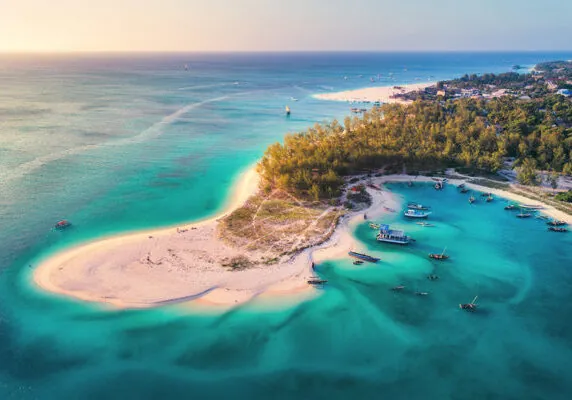
Spice island, slow pace.
Known as the "Spice Island," Zanzibar pairs postcard beaches with a genuinely rich history — Stone Town's narrow streets and carved wooden doors are a UNESCO World Heritage Site, and spice farm tours are a local institution for good reason.
The dry season (June through October, plus December to February) brings the calmest seas and clearest skies for diving and beach days — this is peak season for a reason. April and May bring lower prices and fewer crowds if you don't mind the chance of rain.
Where to spend your time.
Stone Town
A UNESCO World Heritage old town — wander past the House of Wonders and the Old Fort, then catch sunset at Forodhani Gardens' night food market.
A Spice Farm Tour
Walk through working plantations of cloves, nutmeg, and vanilla — the tours that gave the island its nickname.
Jozani Forest
Home to the rare, endemic red colobus monkey — a short, easy nature walk found nowhere else on Earth.
Eat like a local.
Zanzibari food blends Swahili, Arab, and Indian influences — heavy on seafood, coconut, and the island's famous spices.
Zanzibar Pizza
A street-food crepe stuffed with meat, egg, and vegetables, folded and grilled — a Forodhani Gardens night-market staple.
Urojo
A tangy, spiced Zanzibari soup, often called "Zanzibar mix" — loaded with potato fritters, chutney, and a boiled egg.
Octopus Curry
Tender octopus simmered in coconut curry sauce — one of the island's signature seafood dishes.
Ready to book Zanzibar?
We'll handle the flight, hotel, and any visa paperwork.